
The real requirement for the finance minister's explanatory speech is to explain the measures taken in the Budget to influence inflation and growth not just through the announcement of a deficit goal, but more broadly through the impact on money supply, consumer demand, foreign trade and investment, explains Nitin Desai.

Some new EU cars, including Mercedes, BMW and Peugeot vehicles, were using around 50 percent more fuel than manufacturers claimed.

Ahead of a meeting of oil producers' cartel OPEC, India on Tuesday said the current oil prices are "very challenging" and rates need to be a "little bit sober" lest they impact a consumption-led recovery of the global economy. Oil Minister Dharmendra Pradhan, who last week again urged OPEC to phase out its production cuts, said India is a price-sensitive market and it will buy oil wherever it gets competitive rates. The rebound in international oil prices from lows hit last month on the back of demand recovery has led to a spike in petrol and diesel retail prices in India.

Mukesh Ambani, who took over the reins of Reliance Industries Ltd (RIL) after the sudden demise of his legendary industrialist father Dhirubhai Ambani, completes 20 years at the helm during which the company saw a 17-fold jump in revenues, 20-times surge in profit and has become a global conglomerate.

I suggest we build a Vigyan Mandir (Temple of Science) with the ambience of a place of worship, so that it becomes a destination for pilgrims. We should embed on its walls bronze plaques describing each scientist mentioned here along with about a dozen of our ancient mathematicians, recommends Professor Kalyan Singhal, historian of science and technology.

Government needs to promote electrification and charge points and make sure India has stable power supply.

India's inflation trajectory in the coming months will be influenced more by the geo-political situation due to the war in Europe and its impact on supply chains and commodity prices. However, the country is better placed than most to "weather the storm" and achieve growth of close to 8 per cent in the current fiscal year, the finance ministry said in its latest monthly economic report on Thursday. "Through the channel of imports, elevated global crude and edible oil prices now have a significant impact on India's inflation outlook. "Government measures to keep the prices of these commodities in check, along with the recent hike in policy rates by the RBI, are expected to temper inflationary pressures in the economy," the monthly economic report for April, drafted by the finance ministry's economic division, said.

This is the first time that petrol sales in the world's third-largest oil importer have risen since the March 25 nationwide lockdown crippled economic activity and sent demand plummeting.

V40 Cross Country is the only car in India by Volvo Cars that is available in both in diesel and petrol versions.

Oil marketing companies IOC, BPCL and HPCL have invited expressions of interest from start-ups that wish to be enrolled as fuel entrepreneurs for doorstep delivery of high-speed diesel through mobile petrol pumps.

Asia's richest man Gautam Adani on Wednesday said his ports-to-power conglomerate will build three giga factories for manufacturing solar modules, wind turbines, and hydrogen electrolyzers as part of a $70 billion investment in clean energy by 2030. Adani group is stepping up investments across the green energy value chain as it aims to become the world's top renewable energy producer by 2030. "The Adani Group has already committed $70 billion (for climate change and green energy).

Inflation has reappeared as a global issue in both advanced and emerging economies and India needs to be wary of "imported inflation", especially due to high oil prices, according to the Economic Survey 2021-22 released on Monday. "Inflation has reappeared as a global issue in both advanced and emerging economies. "India's Consumer Price Index inflation stood at 5.6 per cent YoY in December 2021 which is within the targeted tolerance band," the survey report presented in the Parliament by Finance Minister Nirmala Sitharaman noted.

Petrol and diesel prices were on Thursday cut for the second straight day as international oil prices cooled fell on prospects of speedy recovery in consumption getting clouded by second wave of COVID-19 cases. Petrol price was cut by 21 paise per litre and diesel by 20 paise, according to a price notification of state-owned fuel retailers. Petrol now costs Rs 90.78 per litre in Delhi and a litre of diesel comes for Rs 81.10.
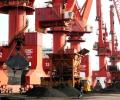
'The coronavirus impact is much bigger than what the market had predicted. We are helpless and simply watching the market at present. Nothing can be done,' said Anil Devli, chief executive officer (CEO) of Indian National Shipowners' Association (INSA).

Petrol price on Thursday was cut by 16 paise per litre and diesel by 14 paise -- the fourth minor reduction in rates in three weeks that followed six months of relentless price increases. Petrol now costs Rs 90.40 per litre in Delhi, down from Rs 90.56, according to a price notification of state-owned fuel retailers. A litre of diesel comes for Rs 80.73 per litre as against Rs 80.87 previously.

Upbeat high-frequency indicators and consumer confidence show that Indian economy continues to forge ahead, emerging out of shackles of pandemic, said an article on the state of economy published in RBI Bulletin on Wednesday. The recovery is spearheaded by an uptick in private investment through November-December alongside a turnaround in bank credit offtake and high capex from the government sector (Centre and states). In conjunction, the employment situation has brightened, said the article written by RBI officials.

Indonesia, the world's biggest supplier of palm oil, said on Thursday it will lift a ban on exports from Monday, likely helping India and other importers. India annually imports around 13-13.5 million tonne of edible oils, of which around 8-8.5 million tonnes (around 63 per cent) is palm oil. Of this, 8-8.5 million tonnes of palm oil, 45-50 per cent comes from Indonesia and the rest from neighboring Malaysia.
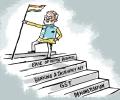
India's GDP expanded 13.5 per cent in the April-June quarter, the quickest pace in a year, to retain the world's fastest growing economy tag but rising interest costs and the looming threat of a recession in major world economies could slow the momentum in the coming quarters.

Petrol and diesel prices on Tuesday were cut for the third time within a week on the back of softening international oil prices. Petrol price was cut by 22 paise per litre and diesel by 23 paise per litre, according to a price notification of state-owned fuel retailers. Petrol now costs Rs 90.56 per litre in Delhi and a litre of diesel comes for Rs 80.87. Rates have been reduced across the country and vary from state to state depending on the local incidence of taxation (VAT). In Mumbai, the petrol price was cut to Rs 96.98 a litre on Tuesday from Rs 97.19, while diesel rates were reduced to Rs 87.96 from Rs 88.20, the price notification showed.

Proper exercise, good routine, optimal nutrition and supplementation can help maintain healthy muscle and bone mass, explains Maitri Trivedi.
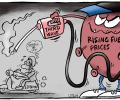
Petrol price on Thursday was hiked by 35 paise per litre and diesel by 15 paise, pushing rates to a new high across the country. Petrol in Delhi now costs Rs 101.54 a litre and diesel Rs 89.87 per litre, according to a price notification of state-owned fuel retailers. The increase comes after rates stayed mute for three days. Petrol price was last hiked on July 12, on a day when diesel rates had seen its first reduction in almost three months. The increase on Thursday neutralised the 16 paise price cut in diesel on July 12.
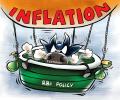
'While intensification of fuel prices and broad-based domestic cost pass-through pressures is a downside risk, core inflation is expected to strengthen further as demand recovers to pre-Covid levels,' the ministry said on Friday.

'Growth would have to be 7% in the October-March period, if the year as a whole is to clock 6%.' 'Who would bet on that when, in the world of real numbers, both exports and imports have continued to fall, car sales have continued to slump, and the industrial production index shows yet again a drop in output?', asks T N Ninan.

After bumbling for years since 2014, the Modi government seems to believe that massive government expenditure will lead us to prosperity supported by 'seat-of-the-pants' decision-making, observes Debashis Basu.

Google will lay off 12,000 jobs across the globe, its CEO Sundar Pichai announced on Friday, becoming the latest tech giant after Microsoft, Facebook and Amazon to retrench staff en mass amid the global economic downturn. In an email to employees, the Indian-origin CEO said: "I have some difficult news to share. We've decided to reduce our workforce by approximately 12,000 roles." Pichai said the layoffs at Google were carried out after a "rigorous review" of its operations.

Rating agencies Crisil and Icra on Monday revised down their India growth projections for the current fiscal and the second quarter mainly due to the ripple effect of slowdown in global growth and mixed crop output. Crisil downgraded the India growth forecast by 30 bps to 7 per cent while Icra pegged the economic expansion at 6.5 per cent for the second quarter of FY2022-23. "We have revised down our forecast for real gross domestic product growth to 7 per cent for fiscal 2023 from 7.3 per cent, primarily because of the slowdown in global growth that has started to impact our exports and industrial activity.

Reliance Industries will by 2030 create or enable capacity to generate at least 100 gigawatts of electricity from renewable sources, which can be converted into carbon-free green hydrogen, its chairman Mukesh Ambani said Friday as he outlined a 1-1-1 vision to bring down the cost of hydrogen to under $1 per 1 kg in 1 decade. The focus on generating electricity from renewable sources of energy such as solar and wind -will help cut carbon emissions in the world's third-largest greenhouse gas emitter. The same electricity, when converted into green hydrogen, can replace petrol and diesel in automobiles and other fuels in the industry, helping cut down on the use of fossil fuels, carbon emissions and reduce import dependence.

India is likely to become a $40 trillion economy by 2047 -- a 13-fold jump from its current size -- driven primarily by a clean energy revolution and digitalisation, billionaire Mukesh Ambani said on Tuesday. Ambani's estimate for the Indian economy, currently the fifth largest in the world behind only the US, China, Japan and Germany, is more optimistic than Asia's richest man Gautam Adani, who last week stated that India will become a $30 trillion economy by 2050 on back of rising consumption and socio-economic reforms. "From a 3 trillion-dollar economy, India will grow to become a 40 trillion-dollar economy by 2047, ranking among the top three economies of the world," Ambani said at the 10th convocation of Pandit Deendayal Energy University in Gandhinagar.

Indian Oil Corporation (IOC) and two other public sector oil firms will install 22,000 electric vehicle (EV) charging stations over the next 3-5 years to support the nation's target to reduce its carbon intensity and reach net zero emissions by 2070. IOC, the country's largest state-controlled refiner by capacity, will set up EV charging facilities at 10,000 fuel outlets over the next three years, chairman Shrikant Madhav Vaidya said. Bharat Petroleum Corporation Ltd (BPCL) said it will set up 7,000 stations over the next five years while Hindustan Petroleum Corporation Ltd (HPCL) has plans for 5,000 stations.

Govt unlikely to cut excise duties to compensate for higher global prices, say analysts.

In the first reduction in rates in over a year, petrol price on Wednesday was cut by 18 paise per litre and diesel by 17 paise a litre as international oil prices tumbled to the lowest since early February.

Only 80.6 per cent of the Rs 6-trillion allocation has been spent by February, data from the Controller General of Accounts shows.

State-owned oil firms such as ONGC and IOC will invest over Rs 1.11 lakh crore in the next fiscal year starting April as they supplement the government's massive spending programme to spur economic growth. Oil and Natural Gas Corporation (ONGC), Indian Oil Corporation (IOC), GAIL (India) Ltd, Bharat Petroleum Corporation Ltd (BPCL), Hindustan Petroleum Corporation Ltd (HPCL) and Oil India Ltd (OIL) will together make a 7.4 per cent higher capital expenditure in the 2022-23 fiscal (FY23). The capex spending of Rs 1.11 lakh crore in 2022-23 compares with a revised estimate of Rs 1.04 lakh crore for the current fiscal year that ends in March, according to Union budget documents.

Automobile retail sales in India increased by 37 per cent in April on a low base of COVID-hit April last year, automobile dealers' body FADA said on Thursday. Total sales across categories rose to 16,27,975 units in April, as compared to 11,87,771 units in the year-ago period. On a year-on-year basis, all vehicle categories including passenger vehicles and two-wheelers were up as compared with April last year.

Quality-wise, and on the fun-to-drive scale, the T-Roc is in a league of its own, notes Pavan Lall.

It doesn't make sense to view the womb through the prism of religion, community and tradition, warns Shyam G Menon.

With a revival in demand and consumption, FMCG companies are looking forward to 2022 with positivity and hopes of sustaining a healthy growth trend across both rural and urban markets while gearing up to cater to the ever-increasing digitally active consumers and tackle the challenge of higher commodity prices. Health and wellness and convenience are going to remain key trends and FMCG companies are strengthening their core brands, driving premiumisation across their portfolios with targeted innovations as consumers are gravitating towards trusted brands looking for quality, purity and hygiene, in continuation of the trend that started since the pandemic last year. FMCG makers are accelerating digitalisation and are investing in building capability in e-commerce and Direct-to-Consumer channels, identifying it as a key vector of their growth as the threat of a possible third wave is still not away.
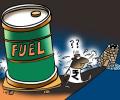
The GST Council might on Friday consider taxing petrol, diesel and other petroleum products under the single national GST regime, a move that may require huge compromises by both central and state governments on the revenues they collect from taxing these products. The Council, which comprises central and state finance ministers, in its meeting scheduled in Lucknow on Friday, is also likely to consider extending the time for duty relief on COVID-19 essentials, according to sources in the know of the development. GST is being thought to be a solution for the problem of near-record high petrol and diesel rates in the country, as it would end the cascading effect of tax on tax (state VAT being levied not just on the cost of production but also on the excise duty charged by the Centre on such output).

India's dependence on imported crude oil to meet domestic demand has been a matter of concern for years. Delivering the inaugural address at the global energy summit - Urja Sangam - in 2015, Prime Minister Narendra Modi had called for enhancing domestic oil and gas production to cut the import burden. He aimed at lowering it by at least 10 per cent by 2022 - to coincide with the platinum jubilee of India's independence. But this target is far from being achieved and the country's import reliance has only risen.

The rise in US bond yields spooked investors last week and there could a further increase given the inflation dynamics, according to Christopher Wood, global head of equity strategy at Jefferies. "The US bond market sell-off has continued over the past week, and with it the increased potential for an inflation scare. "Still, there is plenty of scope for bonds to sell off more since the last time the 5-year forward inflation expectation rate was running at current levels (namely in early December 2018), the 10- and 30-year bond yields were significantly higher at 2.91 per cent and 3.17 per cent, respectively," the market guru said in his newsletter GREED & fear. The 10-year and 30-year US Treasury finished at 1.34 per cent and 2.13 per cent, respectively, last week.
